As grape harvest season gets underway across Niagara wine country, growers and wineries are taking stock of a year marked by trade upheaval, shifting consumer habits and sharply different fortunes across the industry.
The harvest, one of the most important periods of the year for Ontario’s wine sector, comes after months of escalating trade tensions between Canada and the United States. The industry has weathered a series of tariffs, retaliatory measures and, most recently, a near-total U.S. import ban on Canadian wine, forcing producers to adapt to a dramatically altered marketplace.
For some, strong domestic demand has more than offset the loss of access to the American market.
“The last couple of years, we have seen demand for our product skyrocket,” said Kevin Watson, chair of the Grape Growers of Ontario and a grower in Niagara-on-the-Lake.
Watson said Canadian consumers have stepped up in a significant way, helping absorb supply that might otherwise have been destined for export markets.
“Three years ago, we had about 5,000 metric tons of grape surplus. In the last couple of years, we have been short on grape. It’s a seller’s market,” he said. “That’s how much the Canadian consumer has helped our industry.”

International customers helping out with business
The shift comes as many Canadian shoppers have increasingly sought out domestic products following months of trade disputes and restrictions affecting wine sales between the two countries.
At Pelham Family Estate Winery, owner Paul Speck said both consumer support and a healthy crop are contributing to optimism about the sector’s future.
“The crop’s coming in nicely, so I’m very, very confident and bullish about the next couple of years,” he said.
Speck added that some international customers are also turning to Canadian wines amid changing global purchasing patterns.
“We’re hearing from our Belgium and Denmark customers that people are, instead of buying American wines, buying Canadian.”
Struggle being felt elsewhere
While many growers and wineries are benefiting from the changing market dynamics, others are struggling to adapt.
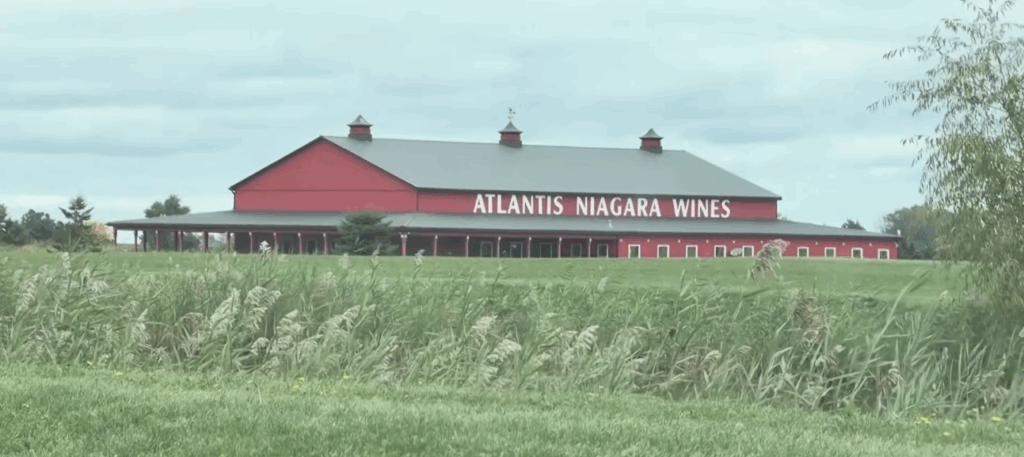
For John Kocsis, who owns Atlantis Niagara Wines with his wife, the past several years have been marked by one challenge after another.
Kocsis, whose business specializes in tourism-focused experiences and premium products such as ice-wine, said sales had finally begun recovering in 2024 after pandemic-related setbacks. That momentum, he said, was derailed by tariffs and trade restrictions introduced in 2025.
“In early 2025, the tariffs came, and then that was just like another kick,” Kocsis said.
Operating in Niagara since 2018, Kocsis said his business relies heavily on tourists visiting the region and purchasing wine to take home. With uncertainty surrounding cross-border sales and travel-related purchases, he fears the business may not survive.
“We’re basically being forced out of business.”
Kocsis said he sees little opportunity to pivot after years of investing heavily in the operation.
“I’ve got everything that we have tied up in this already. The damage that’s been done is just, for us, so embedded into the business now.”
Watson acknowledged that adapting business models in the wine sector can be difficult, particularly for smaller operators.
“It’s very difficult,” he said.
Despite those challenges, vineyards across Niagara remain focused on bringing in this year’s crop. Growers say harvest conditions have generally been favourable, with grapes continuing to come off the vine through the fall.
The 2026 harvest is expected to continue into November, offering the industry’s strongest performers hope for another successful vintage, even as some wineries face an increasingly uncertain future.